Structure Fire Demolition & Cleanup
Fire-Damaged Structures Taken Down Safely and Completely
Structure fire demolition and cleanup in Charlotte for fire-damaged buildings requiring material removal, partial demolition, or full site clearance before restoration
A structure fire leaves behind a specific kind of damage pattern that looks chaotic but follows a predictable logic: the most compromised materials—walls, ceilings, flooring, and framing exposed to direct flame or sustained heat—must be evaluated and removed before any restoration contractor can assess what is structurally sound and worth saving. Daves Demolition Services performs fire-damaged structure demolition and cleanup in Charlotte, handling the removal of compromised building materials, partial interior demolition, and full site clearance depending on what the property's condition actually requires after the fire is out and the assessment is complete. This work sits at the boundary between emergency response and restoration prep, and how it is executed directly determines what options remain for the building going forward.
The demolition sequence begins with an evaluation of which structural elements are load-bearing and which have been compromised beyond safe retention—a distinction that matters because demolishing a damaged non-load-bearing wall incorrectly can affect adjacent structure that was otherwise salvageable. Fire damage cleanup follows the selective or full demolition, removing debris and damaged material so the property reaches a condition where restoration contractors, engineers, or adjusters can access and evaluate the structure accurately. Interior demolition, including removal of damaged walls, ceilings, and flooring, is scoped to what the fire actually affected rather than applied uniformly across the building.
Schedule a site visit with Daves Demolition Services to review the current condition of the fire-damaged property and determine what demolition and cleanup scope applies before restoration planning begins..
What Proper Fire Demolition and Cleanup Requires
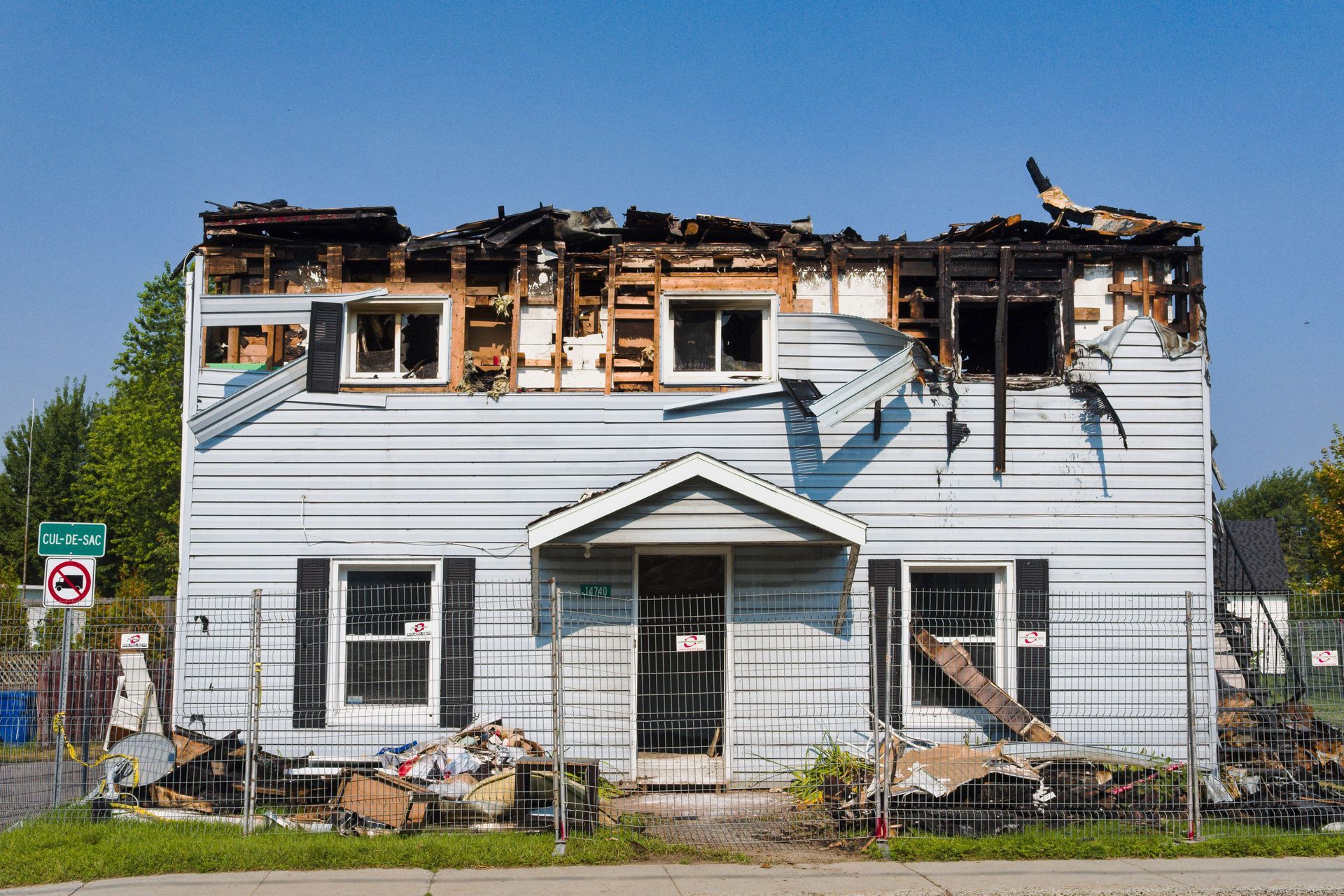
Fire demolition is not equivalent to standard interior demolition. Smoke and heat compromise materials in ways that are not always visible at the surface—framing that appears intact may have lost structural integrity, and flooring or ceiling materials that look partially salvageable may have absorbed combustion byproducts that make them unsuitable for any use below restored finishes. Partial structure demolition requires identifying the boundaries of damage accurately, because under-demolishing leaves compromised material in place and over-demolishing removes structure that a restoration contractor could have worked with. In Charlotte, where the housing stock includes older craftsman-era homes, mid-century brick construction, and newer suburban framing, the structural systems involved vary considerably and affect how demolition boundaries are determined.
Once demolition is complete, the property will be clear of fire-damaged building materials, with the removal boundary defined by actual damage rather than a fixed perimeter. What was interior wall, flooring, or ceiling assembly is gone; what remains is either structurally sound material confirmed during the process or open framing ready for inspection. That cleared state is what allows restoration work to begin without the debris and compromised material that would otherwise obstruct every phase that follows.
Fire damage cleanup runs concurrent with demolition where debris volume requires it, and site clearance at the end of the process leaves the property in a condition that is accessible, evaluated, and documented by what was removed—not what was left behind on assumption. Properties requiring full structure demolition rather than partial demolition are handled under a different scope, and that determination is made based on the structural findings during the initial assessment rather than defaulting to either approach..
What Property Owners Ask About This Work
The questions below cover how fire demolition and cleanup are executed, what drives the scope of removal, and what property owners will see once the work is finished. These answers are specific to the demolition and cleanup phase—not the restoration or rebuilding work that follows.
- What determines whether a fire-damaged structure needs partial or full demolition? The extent and location of structural compromise determines the approach—if load-bearing elements have been affected beyond safe retention or if damage is distributed throughout the structure, full demolition is typically the appropriate scope; localized damage to non-load-bearing interior systems often allows for partial demolition with the shell intact.
- How is fire damage cleanup different from standard debris removal? Fire cleanup involves removing materials that may have absorbed combustion byproducts in addition to the physical debris—this affects how materials are handled and removed from the site, and it distinguishes the work from clearing undamaged construction waste.
- Why does the order of interior demolition matter in a fire-damaged building? Removing damaged walls or ceilings without accounting for adjacent load-bearing elements can destabilize structure that was not directly affected by the fire; the sequencing of removal is determined by the structural layout of the specific building rather than a generic order of operations.
- What does the property look like when demolition and cleanup are finished? You will see a cleared interior or site free of fire-damaged building materials, with the removal boundary defined by confirmed damage—what remains is either structurally evaluated material or open, accessible framing ready for inspection by a restoration contractor or structural engineer.
- How do older Charlotte-area home constructions affect how fire demolition is approached? Older craftsman and mid-century homes often used plaster-and-lath wall systems, dimensional lumber framing, and brick veneer that behave differently under demolition than modern drywall and engineered lumber—the removal method and tools used are adjusted based on what the building is actually made of rather than assumed.
Daves Demolition Services handles structure fire demolition and cleanup for residential and commercial properties, working through the full scope from fire-damaged material removal through site clearance in preparation for the next phase. Connect with Daves Demolition Services to discuss the condition of the property and confirm what the demolition and cleanup work will involve before any restoration planning moves forward.
Take a look for yourself on what your neighbors are saying about us.

Vibratory lowing
Dave did my driveway and ground up some rather large stumps Great work at a more than fair price. He cares about the job he does and strives to complete it to the best of his ability and your liking. Highly recommended and will use again.
Michael Leatherman
Areas we proudly serve
Charlotte
Boone
Mooresville
Winston-Salem
Hickory